
Content-sharing site Pinterest has been
surging
in popularity. The bigger it gets, the more responsibility it has to ensure
that
copyrighted
content doesn't show up on its site.
Less than a week after Pinterest offered an opt-out code for websites seeking
to protect their content, Flickr is adopting that code to help users protect
copyrighted images on its photo-sharing network.
If you're fitting
Pinterest
into your company's marketing plans, or seeking to protect your content from
eager Pinterest users, what should you do?
Pinterest: A Copyright Nightmare?
How is sharing a picture on Pinterest any different than on other social
networks? Both Twitter and Facebook encourage sharing personal experiences and
photos rather than content created by someone else, says Deborah Sweeney,
intellectual property lawyer and and CEO of MyCorporation. While Facebook users
repurpose others' content regularly, Facebook asks each time you upload a photo
if you have the permission to use it. The legal burden lies with the original
person who posted the photo rather than those who share links to it.
Pinterest does not ask users to consider permissions before each "pin,"
aiming to make the user experience seamless. While having your content shared
arguably helps popularize it, many artists and photographers may want to be
asked or paid first.

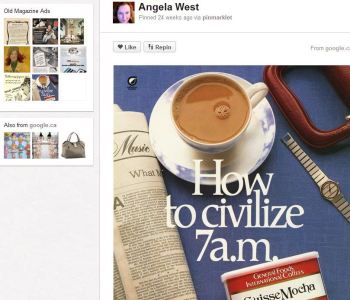 What if General Foods International objected to my
'pin'?
What if General Foods International objected to my
'pin'?Sweeney says Pinterest's business model is the issue, since
its "very nature is to encourage the repinning of photos, which encourages users
to use them as they like." She argues that it isn't a far leap for users to
think it's fine to use a picture from one of their Pinterest boards on a website
or blog, although this is expressly against Pinterest's Terms of Service.
As an example, here's a
pin I made of a 1980s
advertisement for General Foods International coffee. If either General
Foods International or Kraft (its parent company) took exception to my use of
its copyright, it could ask Pinterest to take down the offending advertisement
by
following Pinterest's
directions here. According to Pinterest's Terms of Use, however, it's my
responsibility to get General Foods International's permission prior to posting
anything involving its trademark.
Pinterest offloads legal responsibility onto users, but takes action on
copyright infringement itself. Why not let the artists deal with the infringing
users directly? Pinterest can remove an infringing item faster than a user can,
and it has that right under its Terms of Use.
Pinterest Places Copyright Responsibility on Users
Pinterest does have a stringent policy that the user is not to use
third-party content for anything but a personal content collection on the site.
But it falls down in its
Terms of
Use: "You acknowledge and agree that you are solely responsible for all
Member Content that you make available through the Site, Application and
Services."
The inherent flaw in the legal logic, as Sweeney puts it, is that the images
remain on Pinterest's site, even if a user has curated them into a personal
collection. "Pinterest would have a hard time defending itself by forcing the
liability onto a user. A court could possibly find it liable for a contributory
infringement." Chilling Effects, a site that collects and analyzes legal
complaints about online activity,
seems to agree:"Providing a forum for uploading or downloading
any copyrighted file or cracker utility may also be contributory
infringement".
If, however, your business hopes for its content to be "pinned" to Pinterest,
first check with your product photographer that you own all rights to the images
and that repinning would be an accepted use, since you may have only paid for
the images to be used on your own website.
Pinterest's 'Nopin' Code
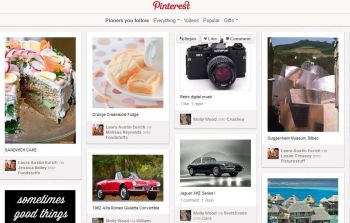 If you need the publicity, don't block your own images from
being "pinned."
If you need the publicity, don't block your own images from
being "pinned."If you want to shield your content from Pinterest,
its “nopin” code lets websites block images from being pinned. Just include this
snippet within the section of the HTML:
Although this code and its predecessors--scripts that prevent downloads of
images--may deter theft of copyrighted photos, determined users can always take
screen captures as a workaround.
On Flickr, by default images that are marked as copyrighted or protected
can't be pinned.
As
the company told VentureBeat on Friday, "only content that is 'safe,'
'public' and has the sharing button enabled can be pinned to Pinterest."
What More Can Pinterest Do?
Pinterest
has a page devoted
to copyright, and a copyright agent who artists and their representatives
can contact to have infringing material removed. While Pinterest is doing a lot
to give aggrieved artists, photographers, and copyright lawyers the tools they
need to deal with infringement after the fact, Sweeney says it should do
more.
"Pinterest could work out an agreement with the larger image providers, and
figure out a way to compensate third-party licensees so the image providers get
a cut. Individual copyright owners may be the losers in this, since they don't
have the negotiation power or the funds to litigate an infringement."
The root problem is that Pinterest's core concept is about repurposing
third-party content, which is supposed to be properly licensed, attributed, or
paid for before being pinned. But users simply aren't going to take that extra
step.
While the "nopin" code is a step in the right direction, Pinterest may have
to do more to restrict the free flow of copyrighted images, which could land
both itself and its users in hot water.


 Wrist Corsages are becoming ever more popular here at Someflower. Not only are they a beautiful and traditional gift from a young man to his partner at the School Prom or Summer Ball, but they also make a stunning accessory to compliment any Bridesmaid Dress or Wedding Outfit.
 Corsages worn on a lapel of a Jacket can be a little heavy when using fresh flowers. They feel very light weight but when worn over a day can sometimes mark the fabric. Lapel corsages here at Someflower are usually mounted on magnets to avoid this happening...however a wrist corsage is also a great option.
 They are really comfortable to wear as they are mounted on a gorgeous elastic cuff which can be made from simulated pearls, diamante or jewelled beads.
  With Wedding Season and Prom & Summer Ball preparations in full swing....why not think about wearing a beautiful wrist corsage for your special event?